
Sir,
I call you a lot of things
Some good
And some bad
You are my provider – yes
You brought me into this world
And that’s a fact that sadly,
I cannot ignore
Whether on purpose, or by accident
Is a subject up for debate
But something you could never be,
Or will be,
Is my father.
No matter who’s name is on my birthcertificate
Or whatever last name I bear.
Sure, you are not only to blame,
It takes two to bear a grudge
But as long as you expect me
To live in your shadow;
To be your reflection –
I’m sorry
There’s simply no room for you here
I have simply grown too full for your cup
Of rum and coke
Or black label and sprite
From which you drank yourself blind
--To my accomplishments;
My growth.
But I know this is your home,
Your castle,
And like you always said
“we do things (your) way around here”
So please,
Do not be offended
As I take my leave,
My leap
My chance – at life
To see for myself whether or not
The grass is really greener on the other side
Don’t get me wrong
You will always be a part of me
The part that I’m always running from
Your shadow
Your reflection
Your smell and your touch
I hope, I pray
To a god I don’t believe in
I can be a better father
Than you
Ever
Were
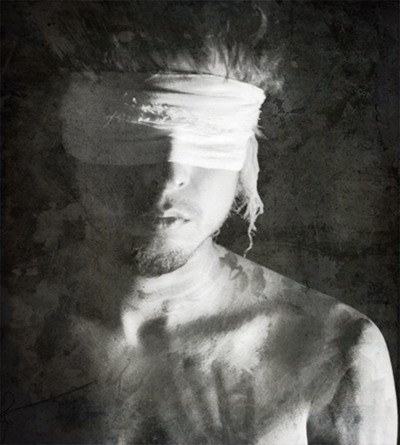
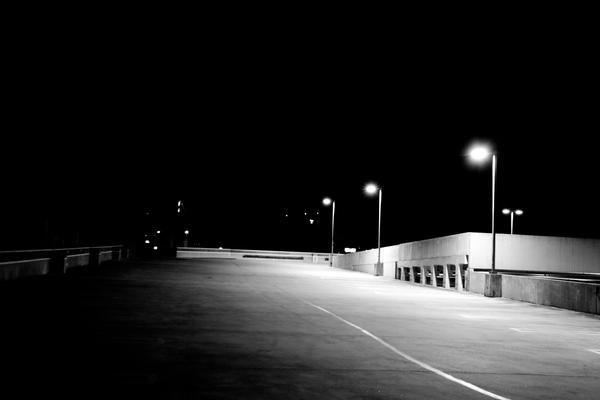
We exchanged a look
as she troddled up the incline
of the top floor
of a parking garage
in some suburban neighborhood,
no different from the rest of 'em
she had jet black hair,
and plump white cheeks.
Her name was Helen,
I assumed so at least, as she looked
as all helens do, I figured
with piercing blue eyes
in which I could only see my own reflection
and pale milky skin
which was smoother than sandpaper, at the very least
Although we only exchanged but that one brief moment
between shock and awe;
that another human soul was here,
sitting on the ledge
on the seventh floor of a parking garage
overlooking the entire city
on a friday night
sculpting words
into expressions
the trademark of a poet
But this moment had to end,
as all moments do, I suppose
as she quietly creeked
to the other end of that lot
sat atop her throne, and lit a cigarette
or two
and our words danced,
although we never exchanged a word
As the city clock struck twelve
and the pidgens startled into the midnight sky
I think we both shared something
like ordered chaos
or beautiful sorrow
in my dance with destiny,
I tasted fate.

there is no hell like
writers block
the impossibility of
expressing the thoughts
that linger within
that hold each moment hostage
that torture - is like no other
Perhaps this is the quiet
before the storm
the last breath before destruction
or perhaps I just need to breath
...or fart
what is a knight without armor
or a souljer without a gun
or a doctor without a stethascope
or a businessman without a business
or a poet without a thought
about what to say
or how to say it
I wish I forgot my pen,
... at least then I'd have an excuse
Today, I am useless.

Is this really how it was meant to be? "

We are far apart, you and I
but we are united by these words
which bleed from me on this here paper
and you, so beautifully read
and interpret
and wonder...
"what was this guy smoking?"
the truth is, if there ever was such a thing
that we poets focus too much on ourselves
and not enough on our subjects
there's a hint of narcessism in this whole mess
but who better to clean it up?
so
this one's for you,
whether your young and wrestless
or saturated by life's beauty
Kudos,
for pronouncing these written words
and giving meaning
to otherwise lifeless vessles
you are every poets greatest wish,
or perhaps -- our worst nightmare.

Creativity is a virtue like no other
the mother of love
and the father of meaningful existence
but it is a virtue for which too few have
the heart
For some, it is easier to follow-
to sit in the back-seat of life's carriage
making passive comentary on a life-
-they were too weak to live.
Me?
I hunger for life's underbelly
I drive on an empty gas-tank
and fly kites only in thunder storms
with every action, I write my own destiny
following any road without a who
or a why
or a fucking care in the world
Some people drive to their destinations,
I drive to loose myself,
without any direction.
why?
becuase there's beauty in the struggle.
An artist I am, of words and ideas
my colors are boundless experiences,
unconscious desires,
potential for meaning and lack of direction.
No, I am nothing like the others.
With a stroke of honesty,
I paint with my thoughts, conversations
and actions, of course.
What do I care about paintings of mountains or canions?
or people who have long since deceased
or triangles and squares and circles
and such
I am an artisan of the twenty first century,
with nonsense, I fight the good fight
my canvas is life, and I'm painting my own mosaic

Greetings,
now,
I haven't always been one to wear his heart on his sleeve,
however I do believe that a few individuals have managed to steal my heart like,
candy from a baby
or motivation from a suicidal teen
or dignity from the bush administration.
etc.
Besides the regulars, who should know who they are. (*if I were of oriental discent, here's where I would put the winking emoticon.*) There are a number of people now deceased that have captivated my heart in a similar fashion.
To Name a Few:
Tupac,
Weezy F. Nietzsche,
Albert Camus,
Kurt Vonegutt,
and of course, Cat Stevens
As you all must be wondering now, "what the fuck is this post about, and what do dead people shikhar get's off to have to do with time being a fool with a banjo" **
and now, for a side note:
[[ ** despite popular belief, I love Nietzsche and everyone else on that list in a different light. Physically, they're quite unattractive and boring. Also, Nietzsche had syphilis. ]]
Back to the meaning of life,
there is one, and only one link between banjo's, time, and the forementioned list. Ready for it:
too bad, other people are...
..
..
Charles Bukowski.
He looked like this:
After picking a few of his books from the excesses of capitalism, (for more hilarity, see "obvious euphemisms)
I have realized he is precisely what was missing from my life.
pre-empt: no, he's not a woman, or a life, or a gym, or religion.
he is, however a god among men. err, at least was. He fell off the map in 1994 just as he published his last book. (they say he suffered from perpetual awesomeness. This continual dose of awesome ultimately culminated in an awesomeness attack, which claimed the life of the greatest half-german half-american bastard to ever write a book.
Without further ado, here's a short story:
Disclaimer:
this story is fucking weired, but nevertheless I like it. My favorite quote is bolded.
back to the goods:
NO WAY TO PARADISE - CHARLES BUKOWSKI
I was sitting in a bar on Western Ave. It was around midnight and I was in my usual
confused state. I mean, you know, nothing works right: the women, the jobs, the no
jobs, the weather, the dogs. Finally you just sit in a kind of stricken state and wait like
you're on the bus stop bench waiting for death.
Well, I was sitting there and here comes this one with long dark hair, a good body,
sad brown eyes. I didn't turn on for her. I ignored her even though she had taken the
stool next to mine when there were a dozen other empty seats. In fact, we were the
only ones in the bar except for the bartender. She ordered a dry wine. Then she asked
me what I was drinking.
"Scotch and water."
"Give him a scotch and water," she told the barkeep.
Well, that was unusual.
She opened her purse, removed a small wire cage and took some little people out
and sat them on the bar. They were all around three inches tall and they were alive and
properly dressed. There were four of them, two men and two women.
"They make these now," she said, "they're very expensive. They cost around $2,000
apiece when I got them. They go for around $2,400 now. I don't know the
manufacturing process but it's probably against the law."
The little people were walking around on the top of the bar. Suddenly one of the
little guys slapped one of the little women across the face.
"You bitch," he said, "I've had it with you!"
"No, George, you can't," she cried, "I love you! I'll kill myself! I've got to have
you!"
"I don't care," said the little guy, and he took out a tiny cigarette and lit it. "I've got a
right to live."
"If you don't want her," said the other little guy, "I'll take her. I love her."
"But I don't want you, Marty. I'm in love with George."
"But he's a bastard, Anna, a real bastard!"
"I know, but I love him anyhow."
The little bastard then walked over and kissed the other little woman.
"I've got a triangle going," said the lady who had bought me the drink. "That's Marty
and George and Anna and Ruthie. George goes down, he goes down good. Marty's
kind of square."
"Isn't it sad to watch all that? Er, what's your name?"
"Dawn. It's a terrible name. But that's what mothers do to their children sometimes."
"I'm Hank. But isn't it sad . . ."
"No, it isn't sad to watch it. I haven't had much luck with my own loves, terrible luck
really . . ."
"We all have terrible luck."
"I suppose. Anyhow, I bought these little people and now I watch them, and it's like
having it and not having any of the problems. But I get awfully hot when they start
making love. That's when it gets difficult."
"Are they sexy?"
"Very, very sexy. My god, it makes me hot!"
"Why don't you make them do it? I mean, right now. We'll watch them together."
"Oh, you can't make them do it. They've got to do it on their own."
"How often do they do it?"
"Oh, they're pretty good. They go four or five times a week."
They were walking around on the bar. "Listen," said Marty, "give me a chance. Just
give me a chance, Anna."
"No," said Anna, "my love belongs to George. There's no other way it can be."
George was kissing Ruthie, feeling her breasts. Ruthie was getting hot.
"Ruthie's getting hot," I told Dawn.
"She is. She really is."
I was getting hot too. I grabbed Dawn and kissed her.
"Listen," she said, "I don't like them to make love in public. I'll take them home and
have them do it."
"But then I can't watch."
"Well, you'll just have to come with me."
"All right," I said, "let's go."
I finished my drink and we walked out together. She carried the little people in the
small wire cage. We got into her car and put the people in between us on the front
seat. I looked at Dawn. She was really young and beautiful. She seemed to have good
insides too. How could she have gone wrong with her men? There were so many ways
those things could miss. The four little people had cost her $8,000. Just that to get
away from relationships and not to get away from relationships.
Her house was near the hills, a pleasant looking place. We got out and walked up to
the door. I held the little people in the cage while Dawn opened the door.
"I heard Randy Newman last week at The Troubador. Isn't he great?" she asked.
"Yes, he is."
We walked into the front room and Dawn took the little people out and placed them
on the coffeetable. Then she walked into the kitchen and opened the refrigerator and
got out a bottle of wine. She brought in two glasses.
"Pardon me," she said, "but you seem a little bit crazy. What do you do?"
"I'm a writer."
"Are you going to write about this?"
"They'll never believe it, but I'll write it."
"Look," said Dawn, "George has got Ruthie's panties off. He's fingering her. Ice?"
"Yes, he is. No, no ice. Straight's fine."
"I don't know," said Dawn, "it really gets me hot to watch them. Maybe it's because
they're so small. It really heats me up."
"I know what you mean."
"Look, George is going down on her now." '
"He is, isn't he?"
"Look at them!"
"God o mighty!"
I grabbed Dawn. We stood there kissing. As we did her eyes went from mine to
them and then back to mine again.
Little Marty and little Anna were watching too.
"Look," said Marty, "they're going to make it. We might as well make it. Even the
big folks are going to make it. Look at them!"
"Did you hear that?" I asked Dawn. "They said we're going to make it. Is that true?"
"I hope it's true," said Dawn.
I got her over to the couch and worked her dress up around her hips. I kissed her
along the throat. "I love you," I said.
"Do you? Do you?"
"Yes, somehow, yes . . ."
"All right," said little Anna to little Marty, "we might as well do it too, even though I
don't love you."
They embraced in the middle of the coffeetable. I had worked Dawn's panties off.
Dawn groaned. Little Ruthie groaned. Marty closed in on Anna. It was happening
everywhere. I got the idea that everybody in the world was doing it. Then I forgot
about the rest of the world. We somehow walked into the bedroom. Then I got into
Dawn for the long slow ride. . . .
When she came out of the bathroom I was reading a dull dull story in Playboy.
"It was so good," she said.
"My pleasure," I answered.
She got back into bed with me. I put the magazine down.
"Do you think we .can make it together?" she asked.
"What do you mean?"
"I mean, do you think we can make it together for any length of time?"
"I don't know. Things happen. The beginning is always easiest."
Then there was a scream from the front room. "Oh-oh," said Dawn. She leaped up
and ran out of the room. I followed. When I got there she was holding George in her
hands.
"Oh, my god!"
"What happened?"
"Anna did it to him!"
"Did what?"
"She cut off his balls! George is a eunuch!"
"Wow!"
"Get me some toilet paper, quickly! He might bleed to death!"
"That son of a bitch," said little Anna from the coffeetable, "ifI can't have George,
nobody can have him!"
"Now both of you belong to me!" said Marty.
"No, you've got to choose between us," said Anna.
"Which one of us is it?" asked Ruthie.
"I love you both," said Marty.
"He's stopped bleeding," said Dawn. "He's out cold." She wrapped George in a
handkerchief and put him on the mantle.
"I mean," Dawn said to me, "if you don't think we can make it, I don't want to go
into it anymore."
"I think I love you. Dawn."
"Look," she said, "Marty's embracing Ruthie!"
"Are they going to make it?"
"I don't know. They seem excited."
Dawn picked Anna up and put her in the wire cage.
"Let me out of here! I'll kill both of them! Let me out of here!"
George moaned from inside his handkerchief upon the mantle. Marty had Ruthie's
panties off. I pulled Dawn to me. She was beautiful and young and had insides. I could
be in love again. It was possible. We kissed. I fell down inside her eyes. Then I got up
and began running. I knew where I was. A cockroach and an eagle made love. Time
was a fool with a banjo. I kept running. Her long hair fell across my face.
"I'll kill everybody!" screamed little Anna. She rattled about in her wire cage at 3
a.m. in the morning.
For any of you who cared enough to read through that, the rest of the book is on ScribD.
"South of No North - A Collection of Short Stories by Charles Bukowski"
http://www.scribd.com/doc/6391043/Charles-Bukowski-South-of-No-North

So. I have a tendency to get low grades on english papers for some reason. Usually because I tend not to answer the question and instead focus on psychological philosophical shit I'd rather think about / found more important. Hover this time, I have been blessed to have a topic CENTERED around philosophy as I got to analys the Oedipus Complex in relation to shakespeare's Hamlet.
Desire and the Oedipus Complex in Shakespeare’s Hamlet
Shakespeare’s Hamlet is not only one of the greatest plays of the Elizabethan era, but also a tragic story of repressed desire turned to inner ressentiment which serves as a classic example of Freud’s theory of the Oedipus Complex. As the story of hamlet unfurls, we see the development of a tragic hero shadowed by the Oedipus complex. In order to better qualify this assertion, we must first understand what exactly is meant by Freud’s Oedipus Complex and secondly analyze and apply this fundamental theory to the chronological development of Hamlet as a tragic hero.
Freud’s theory of the Oedipus complex argues that a young child has a strong sexual attraction towards his mother and competes with his father for her sexual attention. The Oedipus Complex as applied to hamlet follows a perversion of this rivalry: often the child feels overwhelmed by the overpowering masculinity of his father and he ceases to compete with him realizing he’s always second in line. With no other choice, the child is forced to repress his sexual desire which signaling the development a super-ego to counter act the ego in the actualization of perverted sexual desire. In applying this theory to Shakespeare’s tragic hero, Hamlet – one may begin to wonder why Freud didn’t title his theory the ‘hamlet complex’ as it presents a much more realistic account of his theory: focusing on the effects of repressed desire has on Hamlets ability to maintain his composition as a rational actor.
As the story opens, we find that even prior to learning about his uncles dastardly involvement in his fathers death – Hamlet is disgusted and deeply troubled by his mother’s decision to take his hand in marriage. Meanwhile, his uncle works tirelessly to take his departed fathers place as a fatherly figure of nobility in Hamlets life. In fact, seeing Hamlet upset sparks Claudius to urge Hamlet to “stay near” as he is “next in line for the throne” and doesn’t want anything bad to happen to the future king of Denmark. The irony in this is that Claudius accomplishes the opposite of what he seeks as he places his-self in front of Hamlet in line for the throne. In a Freudian sense, the throne is symbolic of a sense of closeness to the queen, (not so) coincidentally his mother. This marks the exposition of Hamlet’s Oedipus complex as his fathers death is supposed to mark his ascendance to his father’s position as his mothers lover and protector, however since Claudius’ sneakily takes his father’s hamlet feels cheated and grows envious of his mother’s new man. As the act closes, we see Hamlet overcome with resentment as he contemplates suicide he feels hapless and vulnerable in sexually repressed state.
Psychoanalyst Jaques Lacan makes an interesting argument for the Oedipus complex as applied to Shakespeare’s hamlet he argues that “The desire, of his mother, is essentially manifested in …”[the] confront[ation] on one hand with an eminent, idealized, exalted object – his father – and on the other with the degraded, despicable object Claudius, the criminal and adulterous brother, [which] Hamlet does not choose.” Hamlets overwhelming love for his mother and hatred of Claudius causes Hamlet to “waver in his abjuration of his mother.” and defuse all responsibility in the incestuous act upon Claudius, as the primal villain in Hamlets unconscious ego. (Lacan 3) Lacan further notes that Hamlet’s disposition against Claudius is due to the fact that “his mother does not choose [Claudius] …[she is instead attracted to him]because of [an] instinct[ual] voracity… The sacrosanct genital objects … appear to her as an…objet d’une jouissancce… in what is truly the direct satisfaction of her need, and nothing else,” Further rationalizing her actions from Hamlet’s perspective. (3-4)
A major turning point for Hamlet is as he learns the “truth” about his father’s death as revealed by his father’s ghastly figure. As act I scene IV unfurls, the ghost of hamlet reveals his mysterious death was in fact a homicide committed by none other than Claudius, who poisoned him in is sleep. He then urges hamlet to avenge his death by taking revenge on his dastardly brother, Claudius –but also explains that he must not hurt his mother. From a psychoanalytical standpoint, the ghost of hamlets father represents his Ego: which leads him to rationalize hurting Claudius and not his mother, a predictable condition of his psychological precondition.
What is often ignored by many theories of Hamlet’s Oedipus complex is that although his actions are primarily driven by his repressed desire for his mother, his father also plays an important role in the development of the fantasy. David Kastan argues that Hamlet definitely feels a type of labinal attachment to his father; warranting that “Hamlet cannot name himself without simultaneously naming his father… his fathers name [becomes] “bound to [him]” and finally [“bound to revenge”] … [and thus hamlet] is bound to… his fathers cause” (Kastan 1) As a result, Hamlet’s identity becomes solely created by his desire for revenge against his father’s killer and his loyalty to his mother, “he would be the only the son, sworn to remember and revenge his father.” (Kastan 1) This overwhelming love for his mother and vengeful longing for revenge for his father born out of his ressentiment creates the perfect ethical cause for the tragic hero, Hamlet – prince, and avenger, of Denmark.
The establishment of Hamlets ethical role is apparent as he cries “Yea, from the table of my memory I’ll wipe away all trivial…records… [so] that youth…be copied there, And thy commandment all alone shall live Within the book and volume of my brain, Unmixed with baser matter.“ (99-104) This is precisely what Lacan would call the perversion of the phantasmal order in the creation of the fantasy. He argues that “the fantasy… [is] paradoxical… [On] one hone hand the end term is desire, and on the other hand… it’s…located in the conscious” (Lacan 5) This fundamental theory helps to explain Hamlet’s continual struggle with his super-ego –. Hamlet’s outcry signals his return to his childhood obligations, the inversion of the super-ego is complete as Hamlet finds a new ethical cause by which to live his life. even after his commitment to a new ethical cause Shakespeare’s comparison to the bible seems to signal that like Christ, Hamlet too becomes a martyr for his cause. However, The difference between hamlet and Christ is that Hamlet lives by no moral order: he feels justified in doing anything and everything to satisfy his inner ego. Lacan further notes that “insofar as the fantasy marks every human passion… perverse… it appears in a sufficiently paradoxical form to… have motivated the rejection of the phantasmic dimension as being on the order of the absurd.” (Lacan 5) The absurdity that ensues hamlet’s perversion of moral and biblical order is the very absurdity that characterizes the original fantasy of unity with his mother and vengeance for his father who he now aware of his instinctual interconnectivity to. No longer living by the book of piety and weakness that had entrenched his identity– He returns to his most innate primal instinct: love for his mother, and vengeance for his father.
Learning the truth has a magnanimous affect on his mental stability, as it exposes the inherent disjunction between his desire to maintain his biblical sanctity as the prince of Denmark and his desire to avenge his father’s death – causing hamlet to violently snaps back and forth between a dimension of rationality and irrationally. The forces that were once repressed by his super-ego discharge in an irrational manner as his ressentiment turns outwards and he begins to lash out at everyone he loves, even raising his voice at his beloved mother. Then suddenly he loses all ability to cope with the world and descends into a deep depression in which everything seems meaningless, he begins to question his own ontological being: “to be or not to be… that is the question. .” (54-55) His subjectivity in question, Hamlet falls back upon his logic to create an ethical justification for violence against his stepfather; his plan: to develop a litmus test to determine Claudius’ Guilt.
As he becomes sure of Claudius’ guilt, many critics of my position argue that hamlet , being so desperate to kill Claudius, should have taken any opportunity to do it. Since Hamlet does indeed pass off an opportunity to kill Claudius in prayer, critics believe the theory of a new Hamlet born out of ressentiment to be falsified. However what is ignored is that due to the very the nature of revenge, which Kastan argues “… is a desperate mode of imitation…[in which] The revenger is…allowed only to re-act to –and re re-enact – the original crime, ” (3) the inner ressentiment that now consumes Hamlet presents a more logical explanation of his decision to wait. That is, his delay can only be understood as a last grapple between the ego and the super-ego, a battle between the pious rational actor within hamlet and his overwhelming desire to take revenge on Claudius. Shakespeare creates the perfect setting to express the inner struggle Hamlet undergoes by alludes to the perversion of the moral fantasy as he presented with the opportunity of murdering Claudius in prayer, but refuses to take it. Kaston concludes that his refusal is an indication of “[a] resistance to accept his imitative relation… to his father who urges him to revenge” further revealing an underlying complexity of Hamlet’s Oedipus Complex. (Kastan 3)
Hamlet’s final hour is perhaps most revealing as what remains throughout most of the play an inner conflict is given a means to physically discharge, his super-ego is overcome by his ego and his innate desire as his life is pitted against that of Leartes. Interestingly enough, Hamlet enters the competition on the side of his enemy, and has absolutely nothing to gain from it besides a title of nobility and honor. However what Hamlet remains blind to is that he is entering into “the most serious of games… a game [in which] he will lose his life in spite of himself.” (Lacan 20) The spirit of the Martyr is clearly present as the conditions of the tournament express “the very nature of the fantasy” as Leartes proves to be his mirror double. (Lacan 20) Lacan warrants that “the basis of aggressivity… [is situated] in the imaginary register… the one you admire most… [is] the one you have to kill.” (Lacan 21) Furthermore, the fact that Hamlet’s inner desire to murder Claudius does not surface until he learns about the death of his mother further at the hands of Claudius and of his secret ploy to poison Hamlet which Leartes regrettably informs him of further reveals that his thirst for vengeance is born out of the irrationality that subsumes him in the actualization of his Oedipal desires. Hamlet proves to be a true martyr for his perverted phantasmal order as with his final breaths, he avenges his father and satisfies his desire for closeness with his mother – even in death. His revenge upon his father presents a bitter-sweet irony that no Shakespearian tragic hero would be complete without, as he impales Claudius with the very double-edged sword that killed Leartes, and now ushers in his death, on the very throne on which his father once sat and force-feeds him the very poisoned wine responsible for his mothers downfall. In his death, Shakespeare’s tragic fantasy is complete, as Hamlet satisfies his call to ethical violence and proves to be true a martyr for his cause.
~Shikhar